Maple is the one tree where the timing question has a visible consequence. Cut a maple in March and it will run sap out of the wound for weeks. It looks alarming.
It is mostly cosmetic, since a healthy maple is not badly harmed by bleeding, but it is messy, it attracts insects, and there is no reason to do it when waiting a few weeks avoids it entirely.
The best window: mid-summer
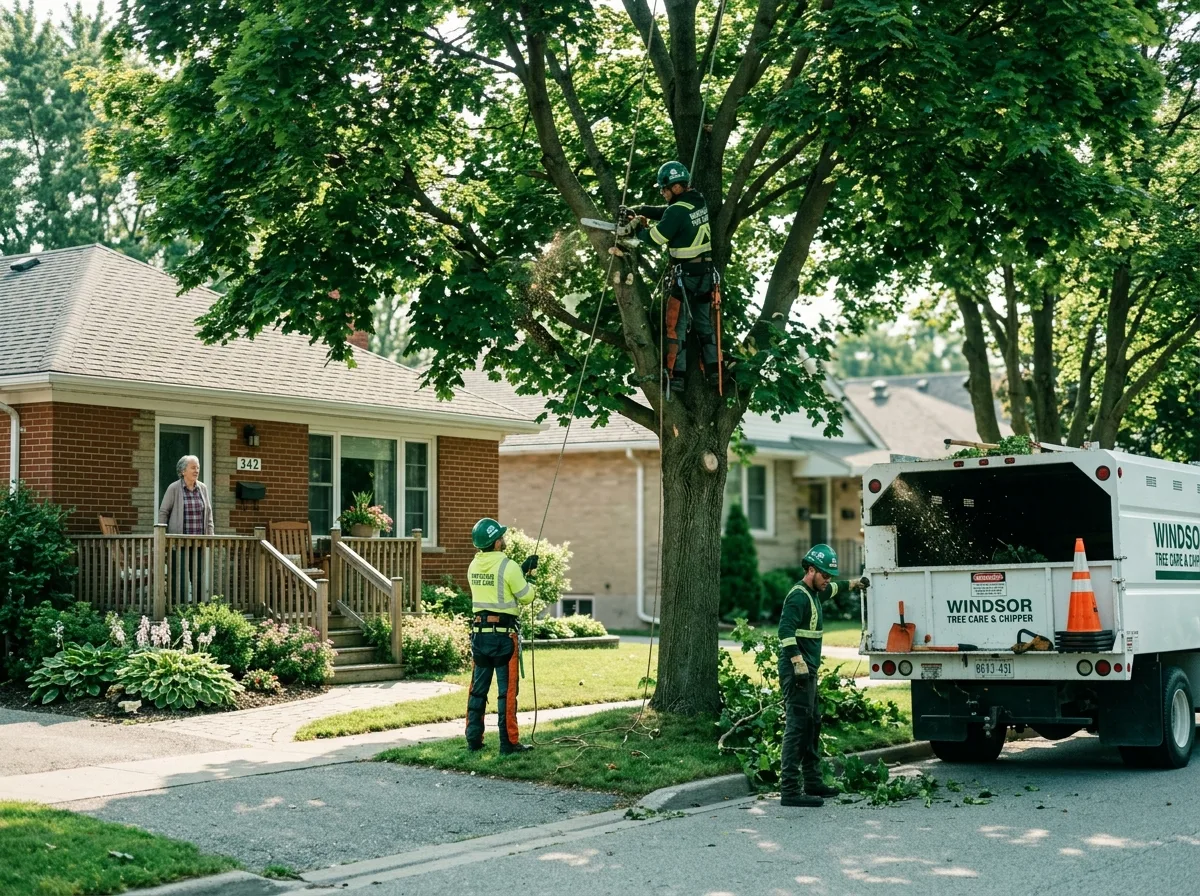
Late June through August is the cleanest time to prune a maple here.
The tree is in full leaf, sap pressure is down, wounds close fast, and you can actually see the crown you are working on. You also get an honest read on what is alive, which you do not get in winter.
The downside is that you are removing leaves the tree is using, so keep summer pruning moderate. Deadwood, clearance, crossing limbs. Not a heavy reduction.
Second window: late fall, after leaf drop
November into early December works well here, and this is where being in Essex County changes the answer.
Our leaves come down late and the ground does not freeze hard until well into winter, if at all in a mild year. That gives us a real late-autumn working window that a crew in central Ontario does not get. Sap flow has stopped, the leaves are off so you can see structure, and you are not fighting frozen ground or snow.
If you want a bigger structural prune on a maple, this is when we would rather do it.
The window to avoid: February through early May
This is peak sap flow, and in this county it starts early. Our late-winter thaws come sooner than the rest of the province, so the run can be going by mid-February in a mild year while northern Ontario is still frozen solid.
Cut a maple then and it bleeds. Every guide telling you to prune deciduous trees in late winter was written for a colder place. Here, late winter is already sap season.
Also avoid the few weeks as the buds break and leaves expand. The tree is spending stored energy at maximum rate and it is the worst moment to take any of it away.
Does the species change the answer?
Sugar maple
Runs the hardest, obviously. Same timing rules, just more dramatic if you get it wrong.
Silver maple
The one most Windsor homeowners actually have, particularly in the older neighbourhoods. Fast, brittle, and prone to bad branch unions, so it needs more attention than the other two. Timing is the same but the pruning itself matters more. There is a lot going on with these trees in this city, covered in our piece on silver maples in older Windsor neighbourhoods.
Norway maple
The tough one to work on, mostly because it casts such dense shade that the interior of the crown dies out. It bleeds a thick white sap when cut in spring. Same rules.
Japanese maple
A different job. Small, ornamental, pruned for shape rather than structure. Light work only, and in winter.
What not to do at any time of year
Do not top a maple
Cutting the main leaders back to stubs to reduce height produces a burst of weakly attached shoots that are more dangerous in ten years than the original tree was. It is the most damaging thing done to maples in this county and it is usually done by whoever was cheapest.
Do not paint or seal the cuts
Wound dressings do not help and can trap moisture. The tree closes its own wounds.
Do not take more than about a quarter of the live crown at once
Less on a mature tree.
One local exception worth flagging
If you are pruning an oak rather than a maple, throw all of this out. Oaks in Essex County should only be pruned between November and March because of oak wilt, and the reasoning is completely different. See oak wilt in Essex County. Do not apply maple timing to an oak.
Booking it
Tree Removal Windsor schedules maple work into the summer and late-fall windows on purpose, does not top trees, and will tell you if a maple has structural problems that pruning will not fix.
Serving Windsor, LaSalle, Tecumseh, Amherstburg, Leamington, Kingsville, and Essex.