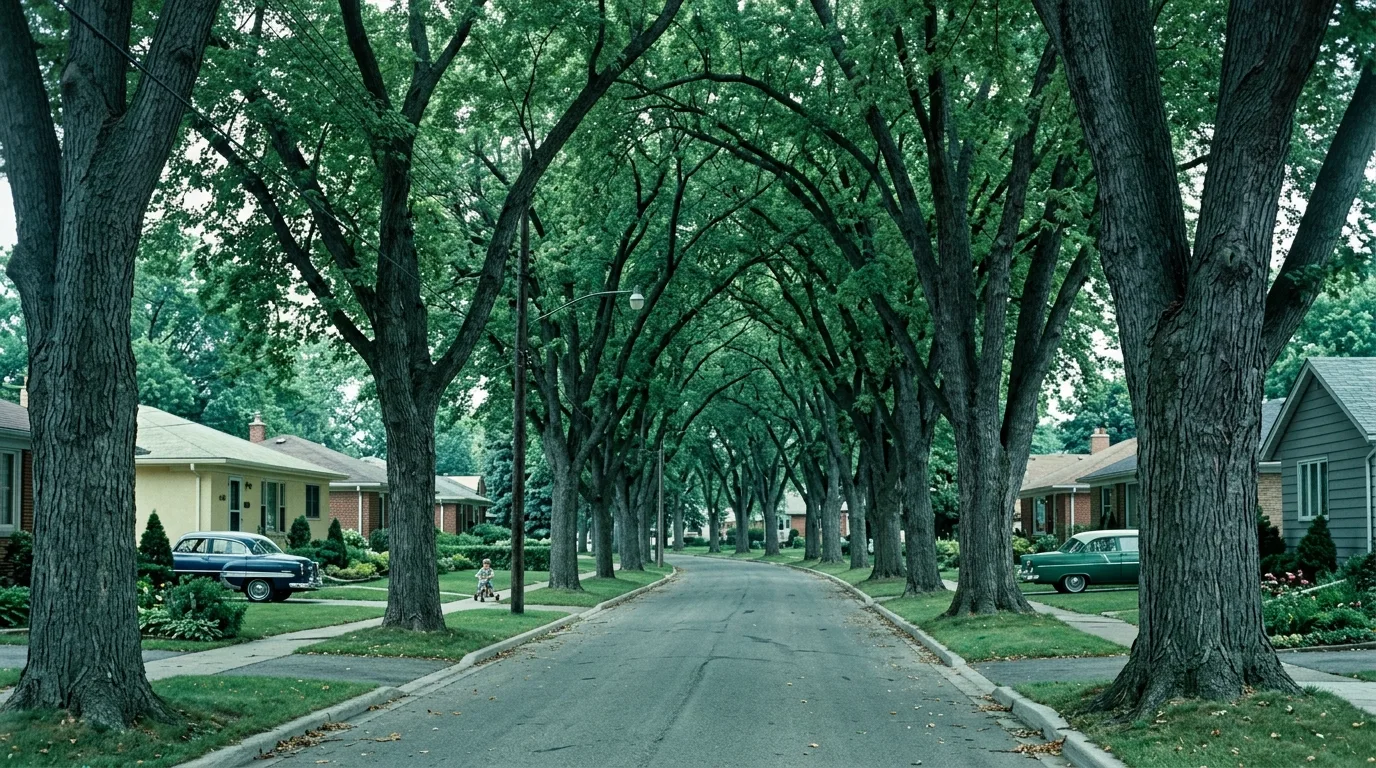
Drive through the older parts of this city and look up. Walkerville, Riverside, South Windsor, parts of Remington Park. Enormous maples arching over the road, planted in rows.
Most of them are silver maples, and most went in during the same stretch, the postwar building boom, when silver maple was the go-to street and yard tree because it grows fast and grows cheap.
That is the thing about planting a whole neighbourhood at once. They also reach the end of their lives at once.
Why silver maple was planted, and why it was a mistake
Silver maple grows faster than almost anything else that survives Ontario winters. For a developer putting up subdivisions in 1950, that is the whole argument. The buyer gets shade in fifteen years instead of forty.
What nobody was accounting for is the trade. Fast growth means weak wood. Silver maple lays down soft, low-density timber that breaks under load. And it has a structural habit of forming co-dominant stems, two trunks of roughly equal size splitting low with a tight V between them, often with bark growing into the join.
That included bark union is the failure point. It has no real wood holding it together, just two stems pressed against each other. Under a wind load, or a load of wet snow, they split. Usually right down the middle of the tree, and usually taking a chunk of whatever is underneath.
A seventy-year-old silver maple with a low co-dominant fork over a driveway is the single most common hazard tree we assess in this city.
The clay soil problem
Essex County sits on heavy clay, and silver maple responds by rooting shallow and wide rather than deep.
You have seen it. Roots running along the surface, lifting sidewalks, ridging up through lawns, coming up in flowerbeds. In sandier soil the tree would go down. Here it goes sideways.
Infrastructure
Silver maple roots are opportunistic about water, and older Windsor neighbourhoods are plumbed with clay sewer laterals that have joints. Roots find the joints. This is a real and frequent problem in this city, and the tree usually gets blamed for a pipe that was already failing, though the roots absolutely make it worse and faster.
Foundations
More nuanced than the internet suggests. Roots rarely crack a sound foundation by pushing. What they do in clay is dry the soil out unevenly under and around the footing, and clay shrinks when it dries. That differential movement is what causes damage. It is a genuine issue in Essex County specifically because of the soil, and much more likely with a large fast-growing tree within a few metres of the house.
Removal can cause the reverse problem, where the clay rehydrates and swells. Which is one reason taking out a very large tree close to a foundation is a decision worth thinking through rather than rushing.
What failure looks like before it happens
Things worth looking at on a mature silver maple.
- The fork. If two main stems split below about two metres and the crotch is a narrow V with a seam of bark running down into it, get it assessed.
- Cavities and hollows, especially where a large limb was removed years ago and the wound never closed. Silver maple decays quickly once the wood is exposed.
- Deadwood high in the crown. Silver maple sheds constantly, but a lot of dead wood up top suggests decline rather than housekeeping.
- Fungal brackets at the base or on the trunk. Shelf-like growths mean decay is already established internally.
- Lifting soil or a gap opening on one side of the root plate. That is the tree moving. Call about it.
What we usually recommend
Not always removal. A structurally sound silver maple with a decent branch union is worth keeping. It is mature shade, and shade on the west face of a Windsor house is worth real money in July.
Cabling and bracing
Where the fork is the concern, this is often the answer. Steel or synthetic cable installed high in the crown to limit how far the two stems can move apart under load. It does not fix the union, it manages it, and it can buy fifteen or twenty years on a tree that would otherwise have to come down. Cables need inspecting every few years, which people forget.
Removal
Where there is significant decay in the main stem, or the tree is over a house or driveway with a compromised union, removal is the honest answer. These trees do not fail gently.
If you have one
Sixty to eighty years is roughly where silver maple starts asking hard questions, and this city's are right in that band. Getting one assessed costs nothing and takes twenty minutes.
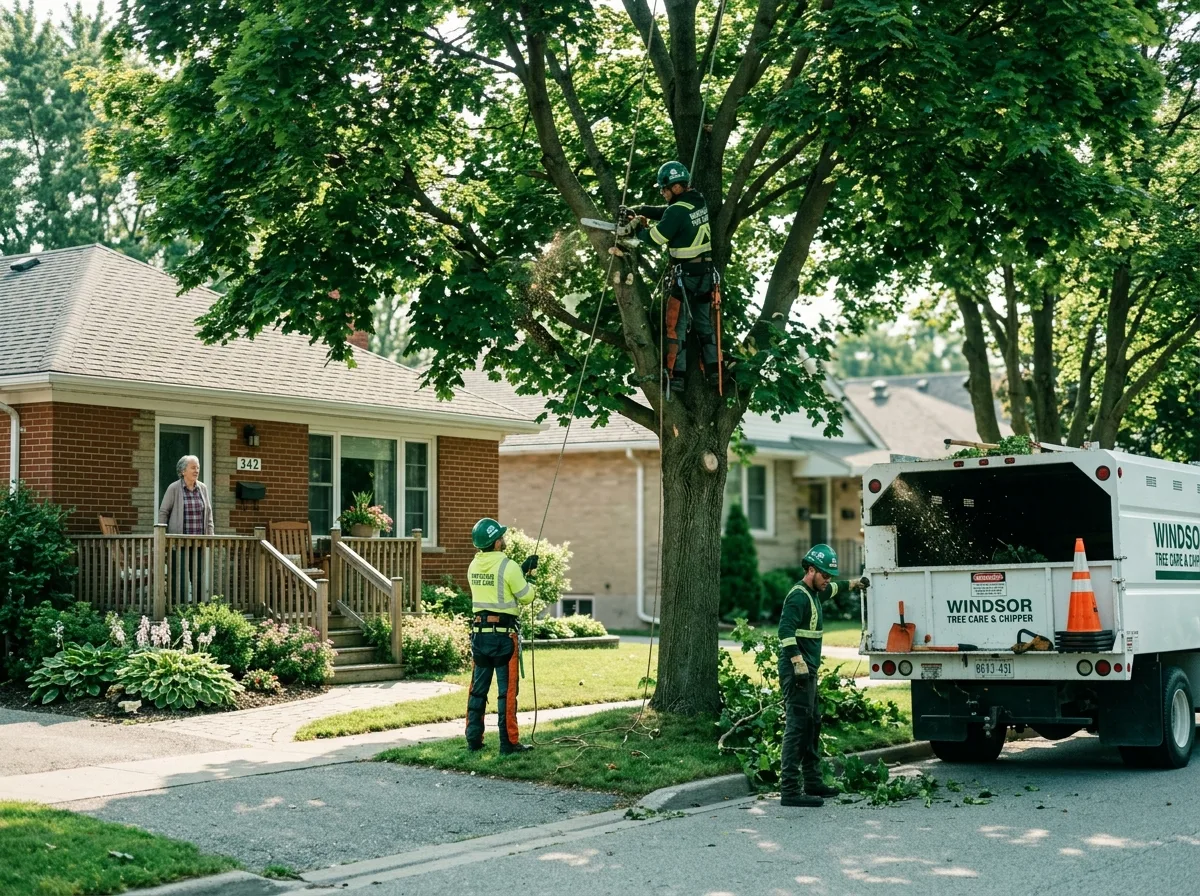
Tree Removal Windsor works on silver maple constantly: assessments, cabling and bracing, structural pruning, and removals in tight lots where the tree is bigger than the yard. Full liability insurance, WSIB clearance, and we carry wood out rather than driving equipment across your lawn.
- Arborist assessments and tree risk reports
- Tree removal in Windsor
- Structural pruning
- Stump grinding
- About us
Serving Windsor, LaSalle, Tecumseh, Amherstburg, Leamington, Kingsville, and Essex.
If the tree can stay, we will tell you what it needs instead. Book an assessment.