Black walnut is the tree people have the most complicated relationship with. It poisons the vegetable patch, drops fruit that stains everything, and it is also the most valuable hardwood most homeowners will ever have on their property.
Essex County has a lot of it. This is Carolinian country and walnut is at home here in a way it is not further north. You will find mature ones in yards, along old fencelines, and in the remnant woodlots across the county.
The juglone problem
Black walnut produces a compound called juglone. It is in the leaves, the husks, the bark, and heavily in the roots, and it is a herbicide the tree makes to suppress competition around itself.
For a lot of plants it works. Tomatoes are famously the worst. They will wilt, yellow, and die within a season of being planted in a walnut's root zone, and homeowners usually blame disease. Peppers, eggplant, and potatoes go the same way. So do rhododendrons, azaleas, lilacs, and hydrangeas.
The affected area runs roughly to the spread of the crown, and further, because the roots extend past the branch tips. Call it fifteen to twenty metres from a mature trunk in every direction.
What you can grow near one
Most grasses, maples, oaks, hackberry, daylilies, hostas, ferns, beans, beets, carrots, onions, squash. Plenty of options, just not the ones people most want.
What does not work
Composting walnut leaves and husks and then using that compost on a vegetable bed. Juglone breaks down eventually but not fast enough to trust. Keep walnut litter out of the compost that is going on the garden.
Raised beds help only if they are properly isolated from the soil below. Roots will come up into a bed sitting directly on the ground.
The other complaints
The fruit
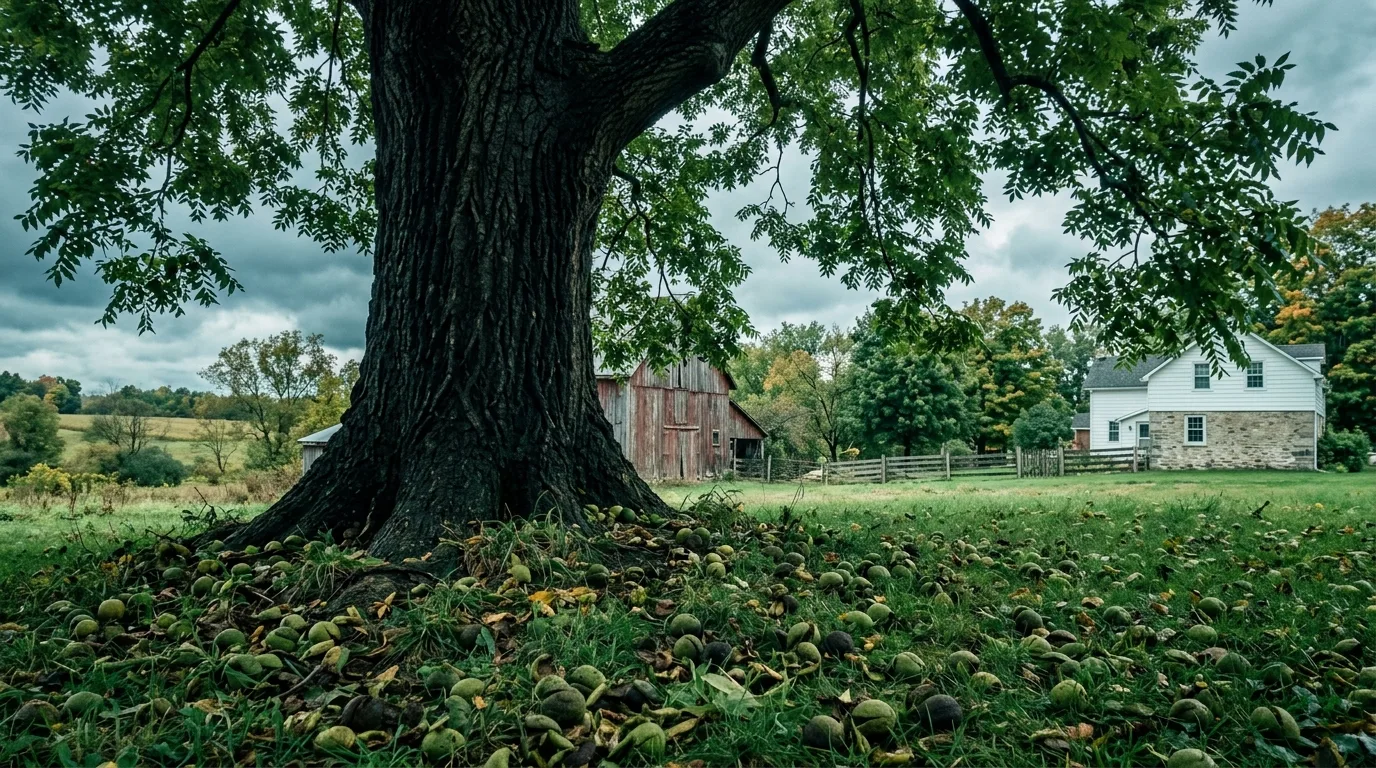
Green tennis balls, dropping from height, in September and October. They dent car hoods, they are a genuine trip hazard on a walkway, and the husks stain concrete and skin a deep brown that does not come off. A mature walnut over a driveway generates real annoyance every autumn.
The mess
Walnut drops leaves early and untidily, and the compound leaves shed leaflet by leaflet rather than all at once.
Squirrels
Not the tree's fault exactly, but a productive walnut is a squirrel magnet, and Windsor squirrels do not need encouragement.
The part nobody tells homeowners
Black walnut timber has real value. It is one of the most sought-after hardwoods in North America, with dark heartwood, and it is used for furniture, gunstocks, and veneer. Whether your tree is worth anything depends on things most people do not think to check.
- The trunk needs to be straight, with clear length. Ideally two and a half metres or more of trunk with no big branches or knots. A tree that forks low is worth much less.
- Diameter matters. Under about 40cm at chest height there is not much in it. Over 60cm with good clear length and you are into money.
- Yard trees are penalized. Sawmills are wary of them because homeowners put nails, fence staples, clothesline hooks, and tree house screws into trunks, and hitting metal destroys a blade. A woodlot walnut is worth considerably more than an identical yard walnut for that reason alone.
- The tree has to be felled and bucked for lumber, not for disposal. If a crew drops it and cuts it into 40cm firewood rounds, the value is gone. That decision gets made in the first ten minutes of the job.
How we handle it
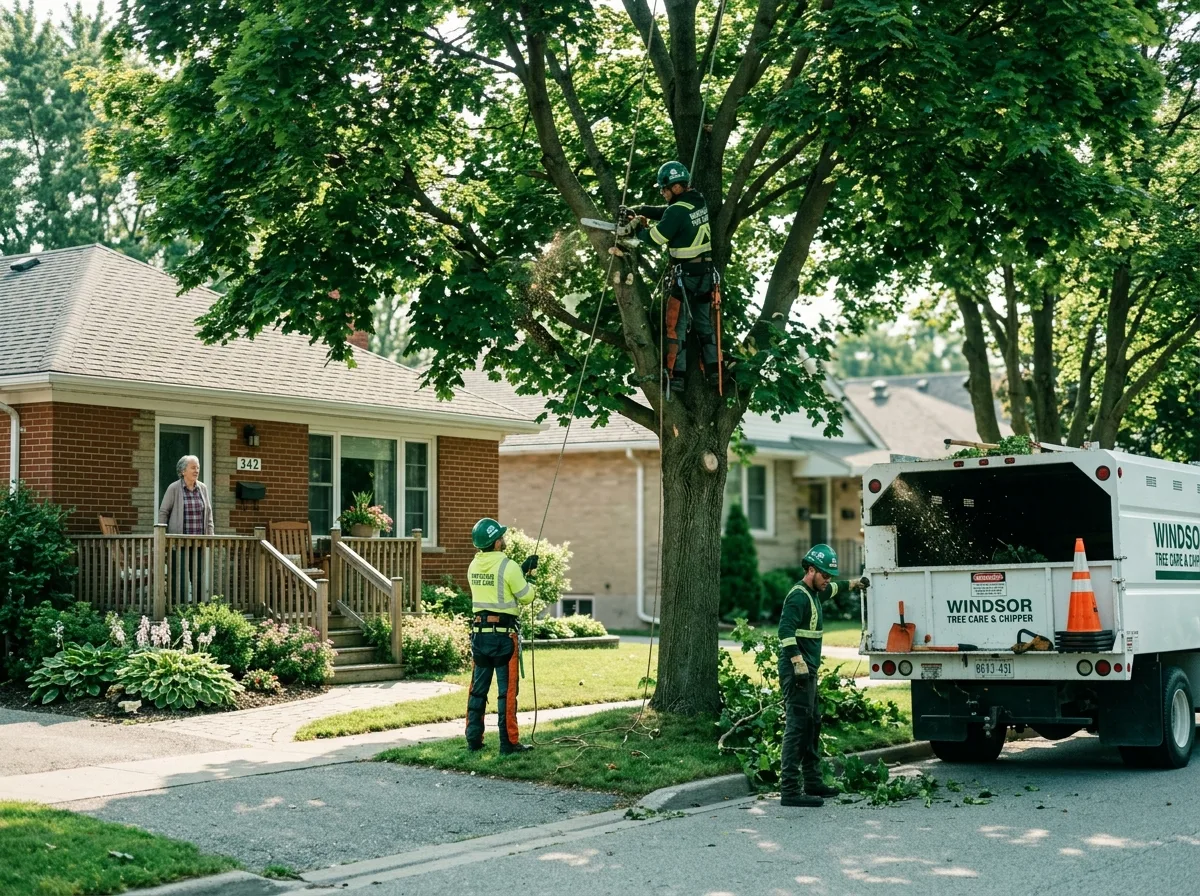
If you have a walnut worth milling, we will tell you before we cut anything, and we will buck it into saw logs rather than firewood. The value goes back to you as a credit against the removal.
We want to be straight about the size of that. On a good yard walnut it might take a meaningful bite out of the invoice. It is not usually a free removal, and anybody offering you free removal in exchange for the wood is betting they will come out well ahead. Sometimes that is a fair trade. Often it is not, and you should know the number before you agree. More on that in what goes wrong with cheap tree removal.
If the tree is not millable, because it forks low or is full of metal or decayed in the butt, we will say that too, and it is a normal removal.
Should you take it out?
Honestly, often no. A healthy mature black walnut is a valuable Carolinian tree, it is excellent shade, and the juglone problem is solvable by putting the vegetable garden somewhere else. We would rather help you work around it.
Where removal makes sense: the tree is declining, it is structurally unsound, the fruit drop over a driveway or pool has become genuinely unmanageable, or it is in the wrong place for a build.
One caution. Butternut is a close relative, it is a protected species at risk, and it gets mistaken for black walnut regularly. Get the species confirmed before you commit to anything. See trees of the Carolinian zone.
Get an honest read
Tree Removal Windsor assesses and removes black walnut across the county. We will tell you what the wood is worth before we touch it, and whether the tree is worth keeping.
Serving Windsor, LaSalle, Tecumseh, Amherstburg, Leamington, Kingsville, and Essex.