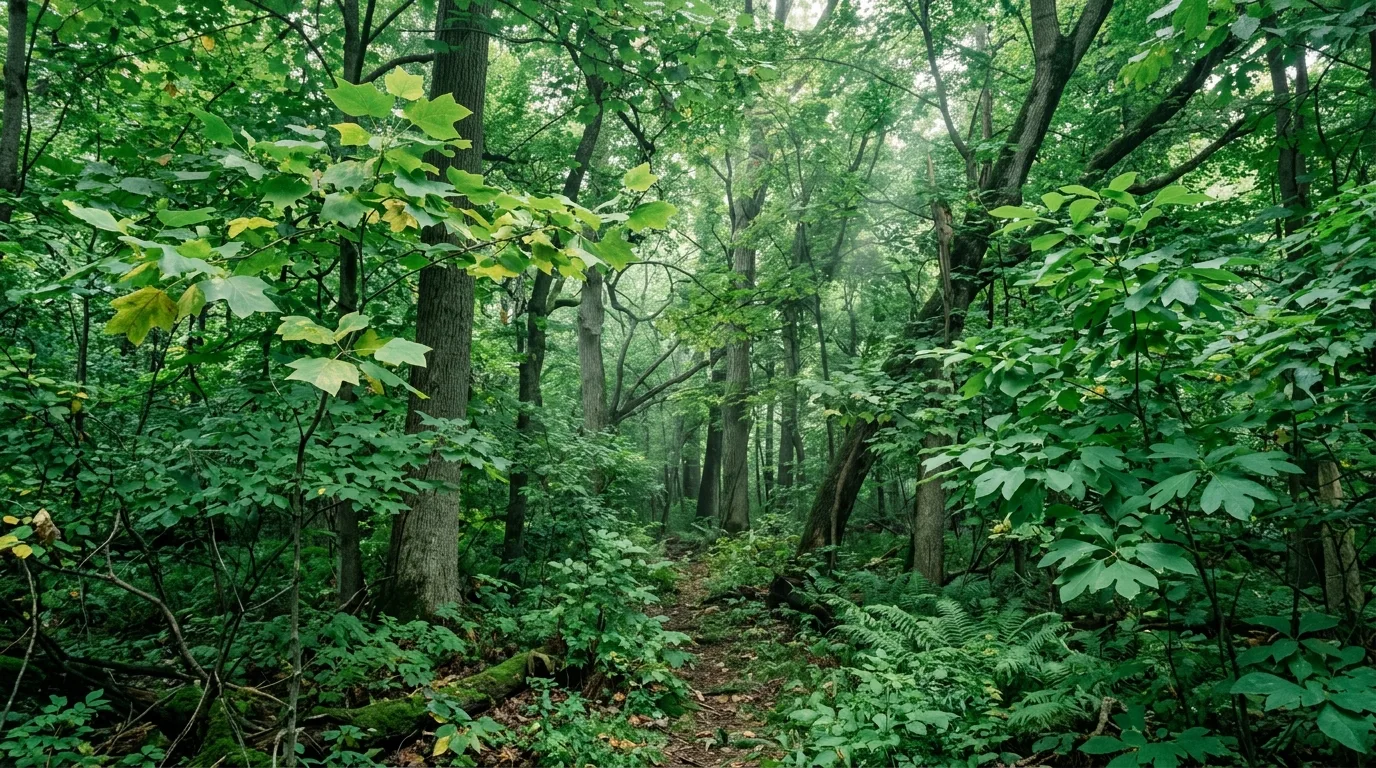
Canada's Carolinian zone is a thin band along the north shore of Lake Erie, and Essex County is its westernmost and warmest end. It covers well under one percent of the country's land area and holds a share of its plant species completely out of proportion to that.
Practically, it means the tree growing in your backyard in Kingsville might not grow anywhere else in Canada. That is a genuinely unusual thing to be able to say about a suburban lot.
If you have ever wondered why tree advice written for Ontario keeps not quite fitting your yard, this is why.
What makes the zone different
The zone is defined by climate. We are further south than the northern edge of California in latitude terms, we are wrapped by three bodies of water that moderate the temperature, and we get the longest frost-free season in the country.
That combination lets southern species survive here that die a hundred kilometres north. It is also why the zone has essentially nowhere to retreat to, since it is already at the edge.
Most of it is gone. The Carolinian zone is the most heavily settled and farmed part of Canada, and the original forest cover was cleared almost completely. What is left sits in fragments: Point Pelee, the Ojibway Prairie complex in west Windsor, Hillman Marsh, various woodlots and a few conservation areas. Those fragments are why a disproportionate number of Canada's species at risk are found in this county.
The trees worth knowing
Tulip tree
Enormous, straight, with a leaf that looks like somebody cut the tip off with scissors, and orange-and-green flowers up in the canopy that most people never notice because they are forty feet up. Canada's tallest hardwood. Grows here, and essentially nowhere else in the country.
Sassafras
Mitten-shaped leaves, some with one thumb, some with two, some plain, all on the same branch. The bark and roots smell of root beer, which is not a coincidence. Brilliant autumn colour. It suckers into thickets, which is worth knowing before you plant one.
Kentucky coffeetree
Rare and strange looking. Enormous compound leaves that arrive very late in spring and drop early, so the tree spends a good chunk of the year as bare architecture. Extremely tough, handling salt, drought, compaction and city conditions. A genuinely good street tree and underused.
Pawpaw
Small understory tree with the largest edible native fruit in Canada, tasting somewhere between banana and mango. Grows in Essex County woodlots and increasingly in yards. If you have one, you have something most Canadians have never seen.
Blue ash
Worth a separate mention. It is an uncommon ash of southwestern Ontario, and it holds up against emerald ash borer noticeably better than the other native ash species. Given that the borer entered Canada right here in 2002 and took essentially every other ash in the county, a surviving blue ash is a meaningful tree. If you have an ash still carrying a full crown, get the species confirmed before you assume anything. See how to identify an ash tree.
Shagbark and shellbark hickory
Shagbark's bark peels off in long vertical strips that curl away from the trunk, which is unmistakable. Both produce edible nuts.
Black walnut
Common here in a way it is not further north. Valuable timber and a chemical grudge against your tomatoes, covered in black walnut in Essex County.
Chinquapin oak, swamp white oak, bur oak
The county's oaks, some of them very old. Also the reason oak wilt is a serious concern locally.
Hackberry, sycamore, black gum, redbud, flowering dogwood
All Carolinian, all present, several of them planted heavily after the ash die-off. The hackberry story is its own post: the tree Windsor planted to replace its ash.
Why this matters if you own a tree here
Identification affects the decision
A tree you would remove without a second thought in Barrie might be a species at risk in Essex County. Red mulberry is endangered and hybridizes with the invasive white mulberry growing in every Windsor alley, and the two get confused constantly. Blue ash gets written off as just another dead ash. Butternut is endangered and gets mistaken for walnut.
Federal protection under the Species at Risk Act applies regardless of municipal bylaws, so getting the species right before the saw comes out is not academic here. Our arborist service does this identification work.
Local advice beats general advice
Pruning windows, planting times, drought stress, species selection. All of it shifts in this county because the climate shifts. Guides written for Ontario generally are written for somewhere colder.
If you are planting
The case for using the Carolinian list is straightforward. These species are adapted to this exact climate and soil, they support the local ecology, and the zone needs the canopy back. Also, a Kentucky coffeetree or a tulip tree in your front yard is a more interesting thing to own than another Norway maple.
The case for restraint: some of them get very large. Tulip tree and sycamore want room.
If you are not sure what you have
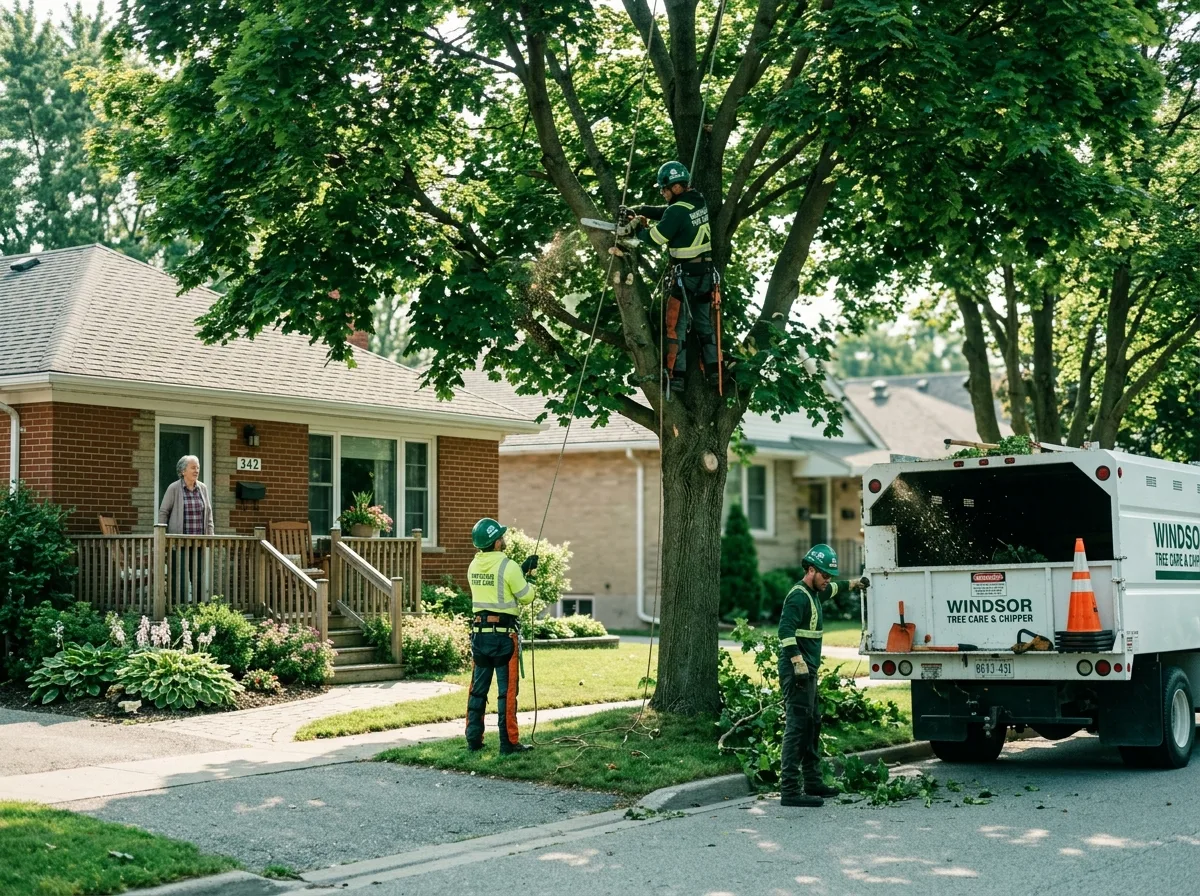
Tree Removal Windsor spends a lot of time identifying trees for people who are not certain. If there is any chance your tree is a species at risk, we would rather find that out before we quote a removal than after.
- Arborist reports and species identification
- Tree trimming and pruning
- Tree removal in Windsor
- Lot clearing for development sites with natural heritage features
- About us
Serving Windsor, LaSalle, Tecumseh, Amherstburg, Leamington, Kingsville, and Essex.