Short version: insurance usually pays when a tree damages something it covers. It usually does not pay just to remove a tree.
That single distinction explains almost every surprised phone call we get after a storm.
The tree fell and hit your house
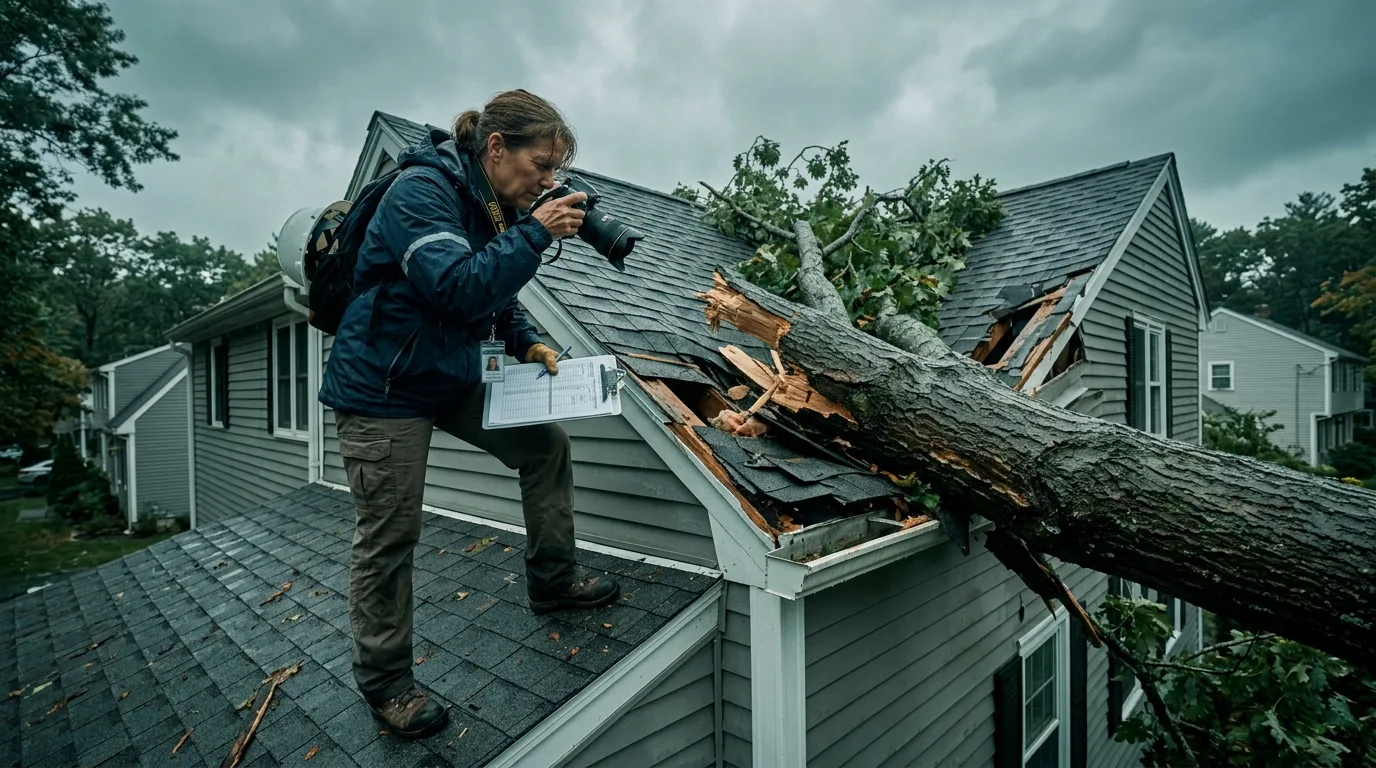
This is the clearest case. A tree comes down in a windstorm, lands on the roof, and you have a claim covering the damage to the house and typically the cost of getting the tree off it.
Coverage for the removal portion is often capped. A limit somewhere in the range of a few hundred to a couple thousand dollars is common in Ontario policies, separate from the structural repair. So the roof might be fully covered while the removal is only partly covered, which catches people out on a large tree.
Worth knowing: many policies cover removal of the debris that caused the damage but not removal of the rest of the tree still standing in your yard. The half on your roof is a claim. The half rooted in the lawn is yours.
The tree fell and hit nothing
Came down in the yard, missed everything, just lying there.
Generally not covered. There is no damage to an insured structure, so there is nothing for the policy to respond to. You are paying for the cleanup.
Fences and detached structures get treated differently depending on the wording, so a tree that takes out a fence is covered under some policies and not others. Read yours or call your broker.
The tree is dying and you want it down before it falls
Not covered, essentially always.
Insurance responds to sudden and accidental events. A tree that has been declining for four summers is neither sudden nor accidental. It is maintenance, and maintenance is the homeowner's.
The part that carries real risk
If a tree that was visibly dead or hazardous comes down and causes damage, an insurer can reduce or deny the claim on the basis that you knew and did not act.
In Essex County that is a live risk, because we have thousands of long-dead ash trees still standing from an infestation that started here in 2002. A dead ash in your backyard is not an unforeseeable event, and it has not been for twenty years.
If an adjuster asks whether you were aware of the tree's condition, a documented arborist assessment showing you got advice and were acting on it is worth having. A neighbour's photo of the same dead tree from three years ago is not what you want them looking at.
Your tree fell on your neighbour's property
Common question, uncomfortable answer.
Generally their insurance handles damage to their property, and their insurer may then come after you if the tree was demonstrably neglected. A healthy tree that came down in a genuine storm is usually treated as an act of nature and nobody's fault. A tree you had been warned about is a different conversation.
The reverse applies too. If your neighbour's dead limb comes through your fence, your insurer likely handles your damage first and sorts out recovery afterward.
A boulevard tree came down on your car
If the trunk is on municipal property, that is the municipality's tree. Claims against a municipality generally require showing they knew or should have known the tree was hazardous, and there are strict notice deadlines for claims against municipalities in Ontario. Short ones. Do not sit on it.
More on who owns which tree in our guide to tree removal rules in Windsor-Essex.
What to do in the first hour
- Photograph everything before it moves. Wide shots and close shots. The tree, the damage, the base of the trunk, the direction it fell.
- Pull together any assessment or work order you have had on that tree previously.
- Call your insurer or broker and ask two specific questions: is debris removal covered, and what is the sublimit.
- Then start getting removal quotes, and keep every invoice.
If there are hydro lines involved, that is not a tree problem yet. Call your electricity distributor and stay away from it. In Windsor that is ENWIN. In Amherstburg, LaSalle, Tecumseh and Leamington it is Essex Powerlines. In Essex, Kingsville, Harrow, Cottam, Comber and Belle River it is E.L.K. Energy. Rural parts of the county are served by Hydro One.
Where we come in
We do a lot of post-storm work in Windsor-Essex and we are used to documenting jobs for claims: photos, written scope, itemized invoicing an adjuster can process. We will also give you a written assessment on a tree you are worried about, which is the cheapest insurance-related thing you can buy.
Serving Windsor, LaSalle, Tecumseh, Amherstburg, Leamington, Kingsville, and Essex.
Tree on a structure right now? Contact us here.
This is general information about how Ontario policies commonly work. It is not insurance advice and it is not a substitute for reading your own policy or talking to your broker.